


What does “Certified Gold” (or Platinum) actually mean in places like the U.S., France, the U.K, or anywhere else?
As a music lover, after some listening, you can tell when a song is good, when it’s mid, or when it falls below expectations, Theartisteguide reports.
But behind the scenes, there are official bodies who track the numbers, measure real success, and decide when a song or album has reached a major milestone.
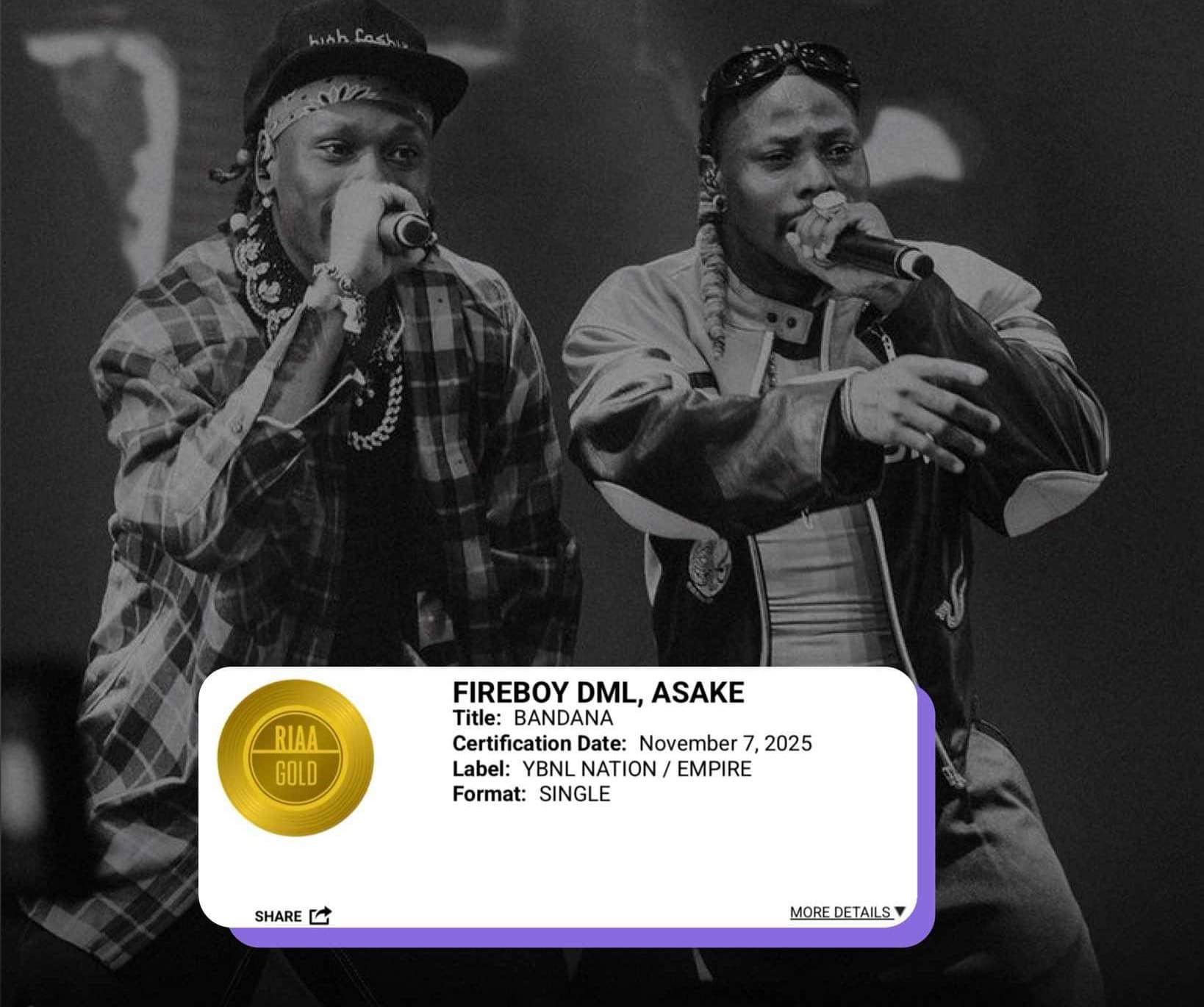
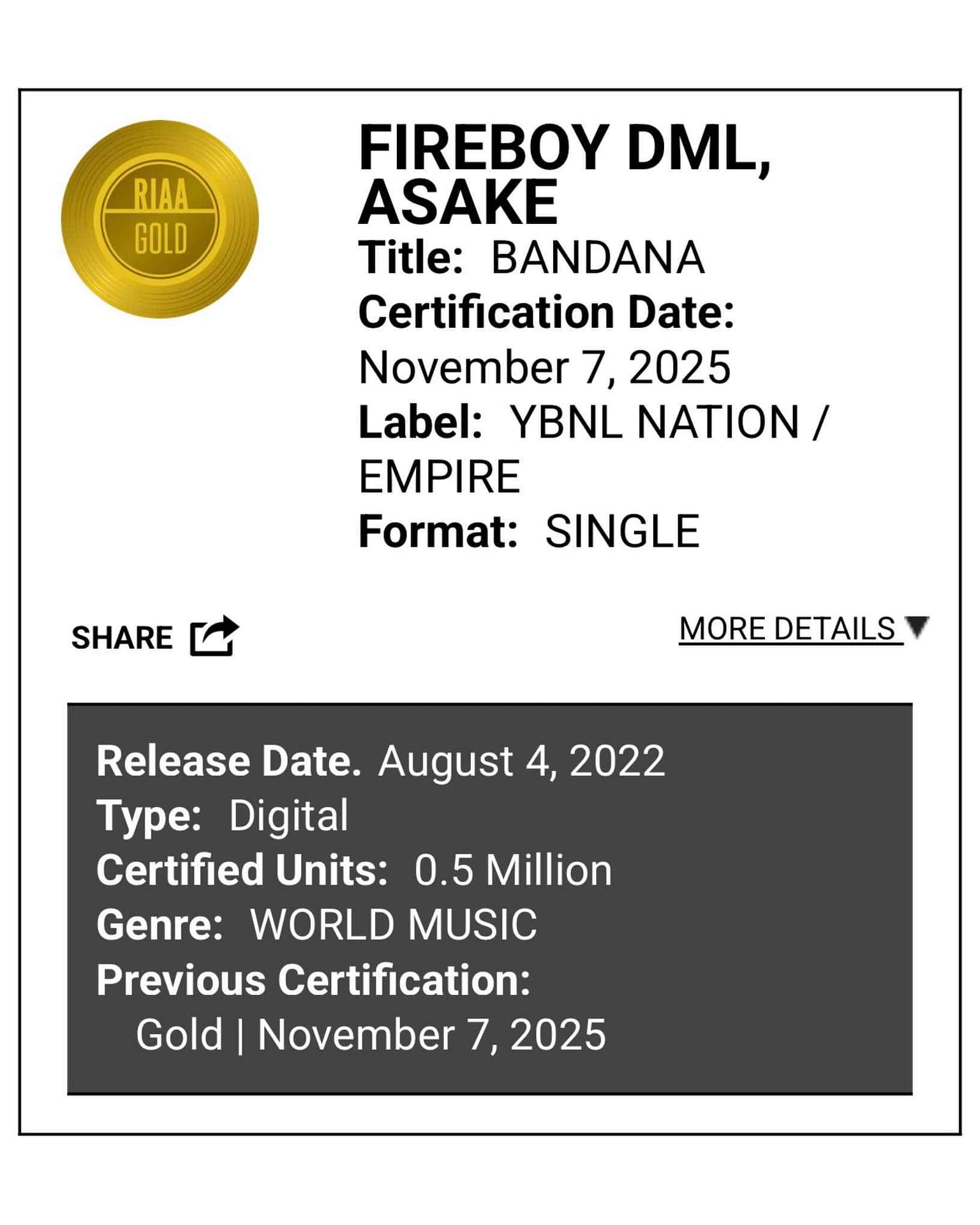
You’ve probably might have come across headlines like “Fireboy & Asake’s ‘Bandana’ is now certified GOLD in the USA” and just kept scrolling. But for some people, the big question is: what does that even mean?
That phrase isn’t just for decoration — it’s a major industry milestone. When a song gets certified Gold, Platinum, or even Diamond, it means it has hit a specific, verified level of sales and streams in the United States.
By the end of this guide, you’ll understand exactly what those numbers mean and why they matter.
How RIAA Certification Works: The Real Numbers
The Recording Industry Association of America (RIAA) is responsible for giving out Gold, Platinum, Multi-Platinum, and Diamond awards. They calculate success using both sales and streams.

Here’s the breakdown:
Gold Certification: 500,000 units
Platinum Certification: 1,000,000 units
Multi-Platinum: 2 million units and above
Diamond: 10 million units
How streams convert into units:
150 on-demand streams = 1 unit (audio or video)
So, for a song to go Gold, it needs about 75 million streams if streaming alone is responsible for the units.
For albums, the RIAA uses a different formula:
1,500 streams = 1 album unit
This system makes it easier to measure modern music consumption since most people stream rather than buy digital downloads or physical copies.
Why These Certifications Matter
Think of these certifications like international scoreboards. They show how far a song has travelled and how strongly it connects with people.
When a Nigerian artist gets a Gold or Platinum certification in the U.S., it means:
Their music has crossed borders.
Millions of Americans are streaming or buying their songs.
The artist is gaining global recognition.
It’s not just about bragging rights — it’s proof that the music is holding its own in one of the world’s biggest music markets.
Nigerian Artists Who Have Achieved These Milestones
Many Nigerian artists have reached these benchmarks, proving how far Afrobeats has come.
Here are some strong examples:
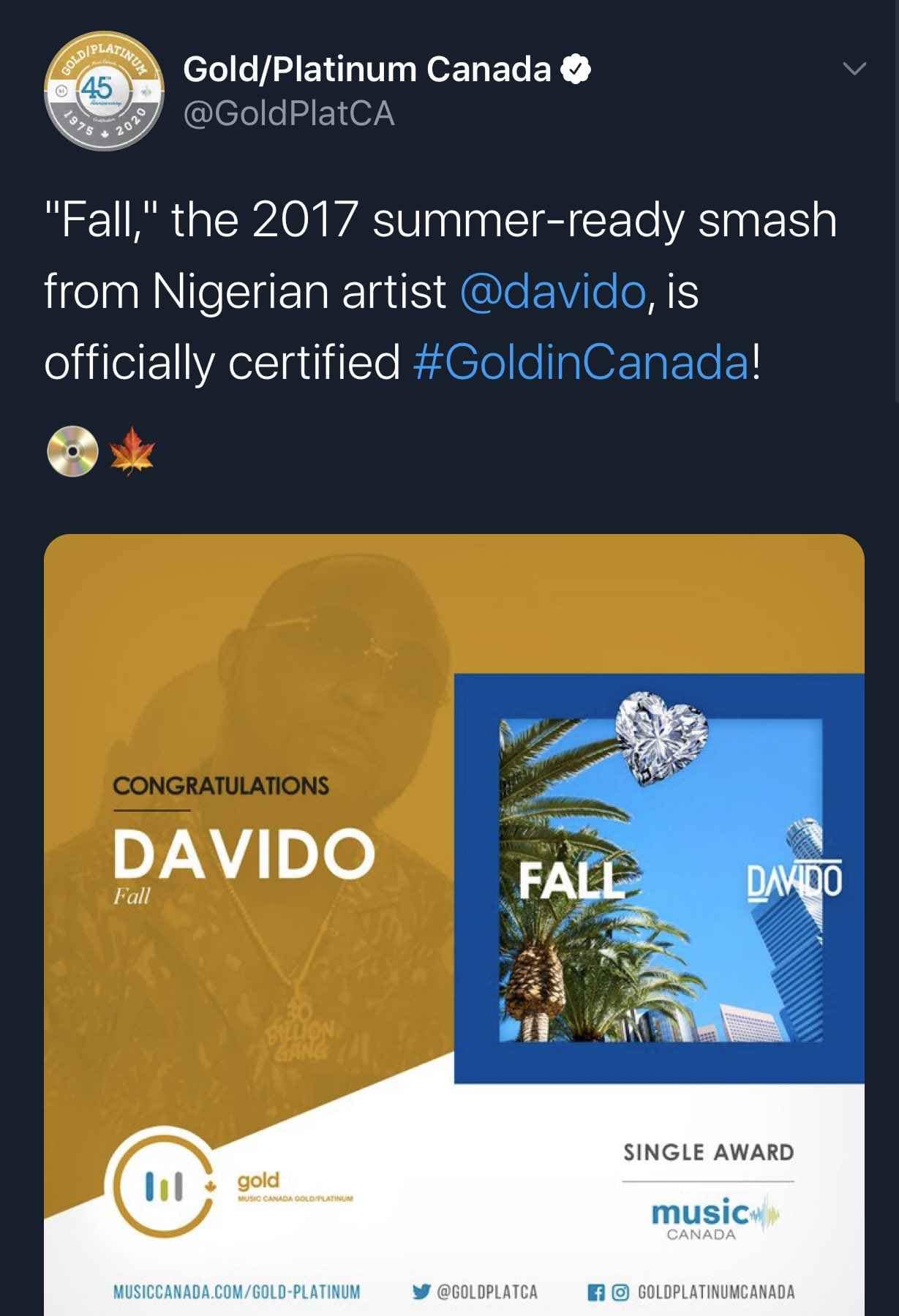
Davido – “Fall”
One of the earliest Nigerian singles to earn a Gold certification in the U.S.
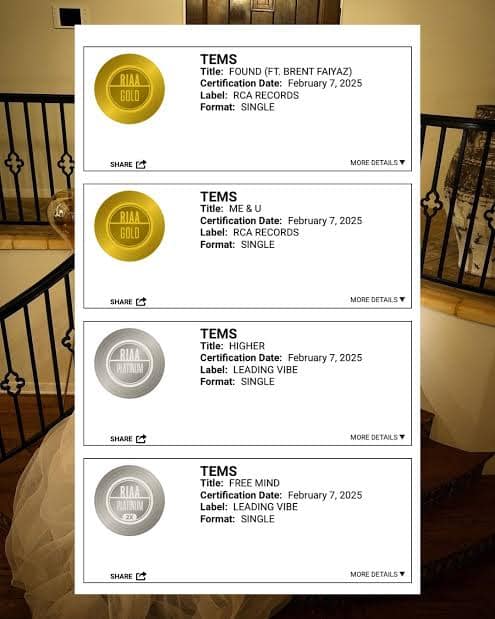
Tems
Several of her songs have crossed the 500,000-unit and 1,000,000-unit marks, earning her both Gold and Platinum certifications. Her track “Love Me Jeje” also recently passed the Gold threshold.
Wizkid – “Soco,” “Joro,” and more
Wizkid has multiple RIAA-certified songs, that sealed his place among the most internationally streamed Nigerian artists.
Kizz Daniel & Tekno – “Buga (Lo Lo Lo)”
The viral anthem officially crossed the 500,000-unit benchmark, earning a Gold plaque in the U.S.
Burna Boy – “Ye”
One of Burna Boy’s biggest global hits, widely celebrated for its certified success.
Rema – “Calm Down”
The remix with Selena Gomez hasn’t just crossed Gold or Platinum — it has moved into multi-platinum territory and set new Afrobeats records in the U.S.
These songs didn’t just trend — they performed consistently, with millions of plays from listeners across different states.
What 500,000 or 1 Million Units Really Represent
When you hear “500,000 units sold” or “1 million units sold,” here’s what it means in real life:
It’s not only about physical play time anymore.
It includes digital purchases and every single stream that fans contribute.
It represents real engagement — people pressing play again and again.
It acknowledges longevity, not just hype.
So when your favourite Nigerian artist earns a Gold or Platinum plaque, you’re looking at a milestone that’s backed by hard data, not just vibes or hashtags.
Why You Should Care
As Afrobeats grows globally, these certifications show how far the culture has travelled. They tell a story: our sound is being heard everywhere — in gyms, clubs, cars, festivals, playlists, and stadiums.
The next time a post pops up saying “Bandana is now Gold in the U.S.”, you’ll understand exactly how massive that win is.


