Certain Nigerian artists are beginning to come out publicly to speak on rising insecurity issues concerning the country as its now getting out of hand.
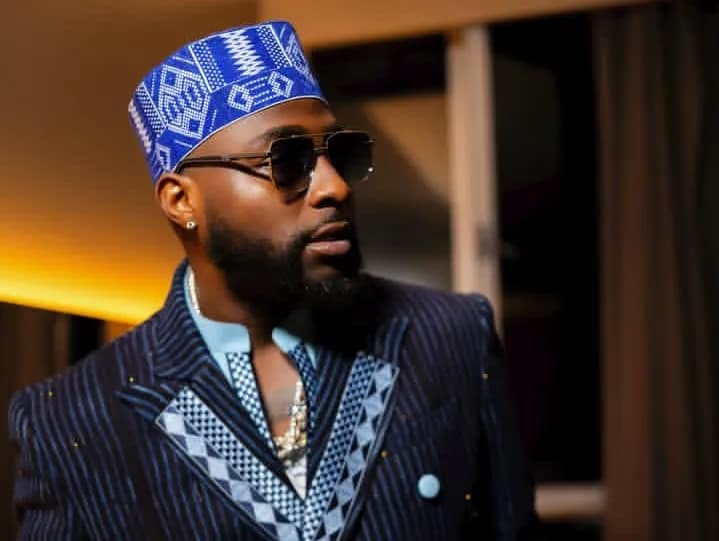
One tweet. One post. One statement. Sometimes that is all it takes to spark a national conversation, Theartisteguide reports.
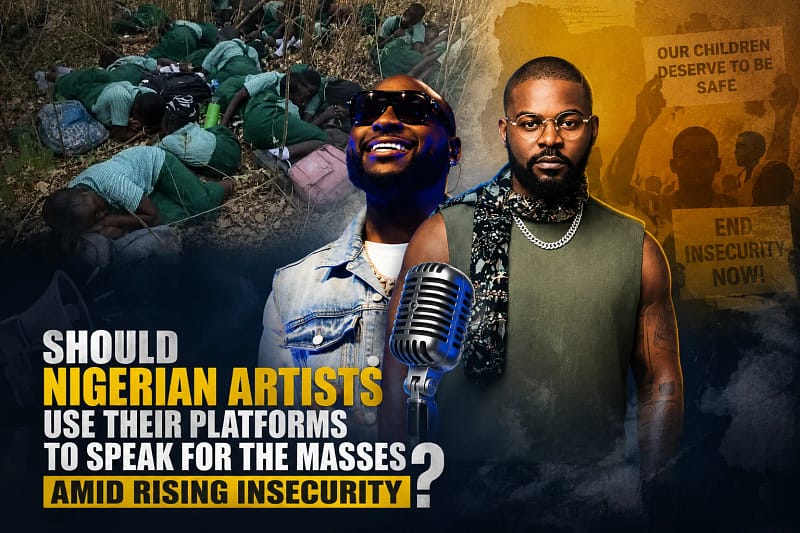
As insecurity continues to dominate headlines in Nigeria, many people are now asking an important question: should Nigerian artists use their platforms to speak for the masses?
From kidnappings and killings to economic hardship, citizens are increasingly looking towards entertainers, musicians, and celebrities to amplify their concerns.
But while some artists have spoken up, many others remain silent or carefully choose their words.
The debate is not as simple as it seems. While Nigerian artists have the power to influence millions, speaking out can come with serious consequences as well.
Why Many Nigerians Want Artists to Speak for the Masses
When tragedy strikes, people naturally look towards influential voices.
Recently, singer Peter Okoye, popularly known as Mr P of P-Square, raised concerns after witnessing a crowd apprehend a suspected bandit in Lagos.
“Omo! Just coming back from a video shoot around Lekki and saw a crowd gathered. Na there I hear say dem catch suspected bandit. Omo, dem don enter Lagos o!.”

His post quickly went viral because many Nigerians saw it as a reflection of growing fears about insecurity in Nigeria.
Peter is not alone.
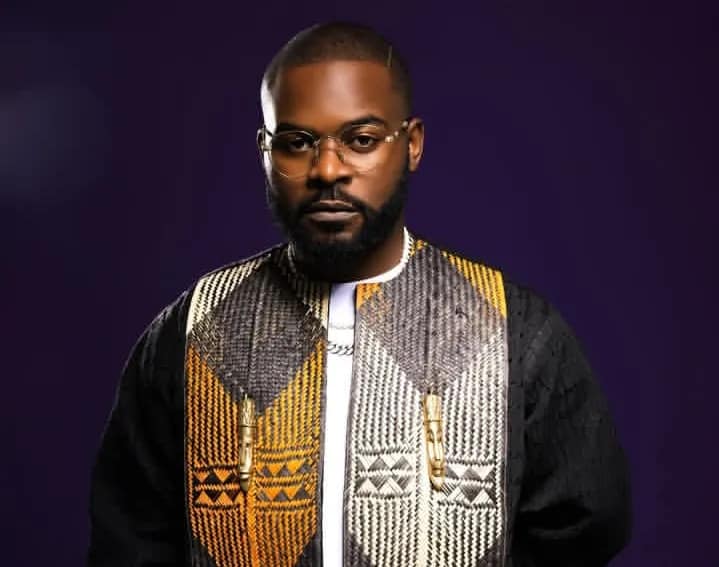
Falz has repeatedly spoken against insecurity, kidnappings, and poor governance. The rapper has consistently used his platform to demand accountability from leaders and encourage citizens to pay attention to national issues.
Veteran singer 2Baba has once described the persistent killings in Benue State as a national emergency, urging authorities to take urgent action before more lives are lost.
Davido joined the conversation recently as well when he criticized the silence of many public figures and celebrities on issues affecting ordinary Nigerians.
According to him, entertainers need to speak up more often instead of staying quiet whenever injustice occurs.
“I can’t lie we entertainers .. we Dey fuckup I won’t lie including me … we need to speak up … it’s too much injustice goin on .. our country don go,” Davido wrote on his X platform.
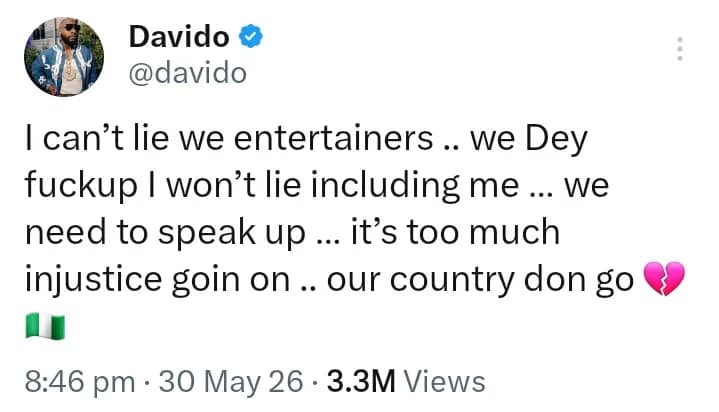
These examples have strengthened calls for Nigerian artists to speak for the masses whenever critical national issues arise.
The Power of Celebrity Influence Cannot Be Ignored
The reality is simple. Many Nigerian artists have larger audiences than some media organizations.
A single post from Wizkid, Burna Boy, Tiwa Savage, Yemi Alade, or Falz can reach millions of people within minutes, just like that simple post from Davido hit 3 million views.
Their influence stretches beyond Nigeria and often attracts international attention.
When celebrities speak, governments listen. International organizations pay attention. Foreign media outlets pick up the story.
This was evident during the #EndSARS movement when musicians and entertainers helped amplify calls for police reform. Their voices brought global attention to a local issue.
For supporters of celebrity activism, this is exactly why Nigerian artists should speak for the masses. They have access to platforms that ordinary citizens may never have.
The Risks and Downsides of Nigerian Artists Speaking Out
While the benefits are clear, there is another side to the conversation.
Many artists operate businesses, maintain brand partnerships, perform at government-sponsored events, and depend on various commercial relationships. Taking a strong political position could affect these opportunities.
There is also the reality of Nigeria’s deeply divided political environment.
The moment a celebrity criticizes the government, some people praise them while others attack them.
Social media quickly turns into a battleground. Supporters and critics often focus on the individual instead of the message and Davidio raised that same concern.
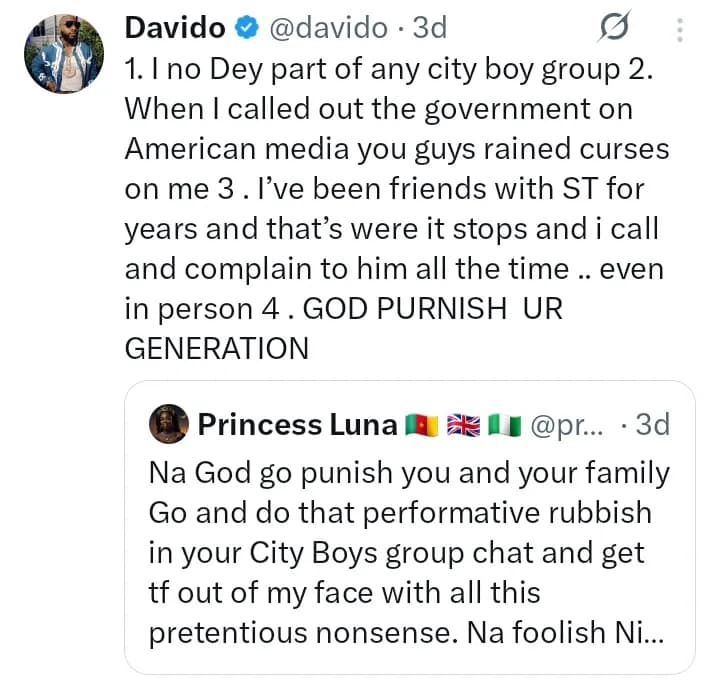
This may explain why many Nigerian celebrities choose carefully worded statements. They address the issue without directly mentioning political leaders or specific government officials.
Should Nigerian Artists Become Activists?
Not every musician wants to be an activist.
Some artists believe their primary responsibility is entertainment, not politics. They argue that elected officials, journalists, civil society groups, and community leaders are better positioned to challenge government policies.
Others believe that remaining silent during difficult times is itself a political choice and this is where the debate becomes complicated.
Should artists be expected to lead national conversations simply because they are famous?
Or should they have the freedom to focus on their craft without public pressure?
There is no universal answer. Every artist must decide how far they are willing to go and this may ultimately depend on what kind of society Nigerians want to build—and what role they believe their biggest stars should play in shaping it.
However, the conversation remains open.
Should Nigerian artists use their platforms to speak for the masses, or should they stay focused on entertainment?